



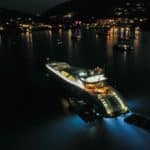
Between the darkness, the sound of the surf and the stars in the sky, there’s something mysterious about the sea at night. Sailing at night is a major challenge for the crew. In the dark, visual cues are limited. The risk of hitting rocks or colliding with another boat is therefore greater. To ensure that your sea voyage goes as smoothly as possible, it’s essential to master the basic rules of night navigation. If you’ve just bought a yacht and want to set off on an adventure at night, we explain the precautions to take and the equipment you need.
Don’t bit off more than you can chew!
 Caution is the better part of valour! So before planning a long night out at sea, take the time to get used to these conditions. To start with, we strongly recommend that you sail back and forth after dark from a port that you know perfectly well. Do this a few times to build up your confidence and get the hang of your yacht in the dark. Afterwards, plan several dawn departures and a few late arrivals. For your first night at sea, choose weather that’s easy to manage and a moon phase that’s clearly visible.
Organise your yacht before you set sail!
Sailing at night can’t be improvised! To avoid running any risks, it’s essential to meet all the safety conditions beforehand by carrying out the usual checks. It’s therefore essential to check all your navigation accessories and life-saving equipment meticulously. This includes lifejackets, signalling devices, navigation lights and distress flares.
Once this stage has been completed, plan your route carefully, taking into account the forecast weather conditions, but not forgetting the currents.
At the same time, the crew briefing should not be taken lightly. Each crew member must be clearly informed of his or her role and the actions to be taken in the event of an emergency, for example.
Take warm clothes with you!
It’s hard to enjoy your outing at sea if you’re shivering from the cold, isn’t it? Unlike during the day, when the sun can warm the atmosphere, nights are particularly cold at sea. So you’ll need to pack warm clothing and equipment to cope with the drop in temperature.
Don’t forget your navigation equipment!
At night, visibility on the water is virtually zero! So it’s essential to use the right equipment to navigate safely. Electronic nautical charts and GPS systems are invaluable allies. These accessories are indispensable for providing information on possible obstacles or the route to follow. Night navigation aids, such as navigation lights, luminous buoys or radar, are also essential to ensure adequate visibility in the dark and to detect other vessels.
Familiarise yourself with lights!
To navigate safely at night at sea, it’s essential to know how to distinguish between the different types of marine lights. Whether they come from the buoyage or from the ships themselves, these visual cues are crucial for sailors. By identifying them correctly, you will be able to distinguish the different characteristics of lanterns signalling shipping lanes or dangerous areas. By understanding what they mean, you’ll have a clear picture of your maritime environment.
Set up watches!
To ensure safety and vigilance on board, setting up watch watches is an essential practice when sailing at night. Unlike during the day, when visibility is good, night time requires constant attention. You need to be able to identify and monitor the lights of other vessels to avoid collisions. To put all the odds on your side, you need to concentrate at all times. It is therefore strongly recommended that you organise watch rotations to ensure that there is a fresh crew member available at all times.
Don’t leave your lifejacket behind!
Although on a yacht you may find this precaution superfluous, when you’re at sea, and even more so at night, you should never leave your lifejacket behind. This safety equipment is essential to ensure your survival in the event of a fall into the water. It is also strongly recommended that you choose a lifejacket with an automatic release, fitted with an individual light for increased visibility. What’s more, it’s crucial to cap your harness with a lanyard when you’re on deck, to prevent you from tipping over into the water.












Leave A Comment